
The quick answer
- MIOSHA's construction toilet summary says employers must provide workers with easily reached facilities without unreasonable use restrictions.
- A construction porta potty is a rental option to discuss when the crew needs facilities at the worksite.
- Plan washing facilities, placement and service access alongside the toilet arrangement, using the workforce and work activities to shape the discussion.
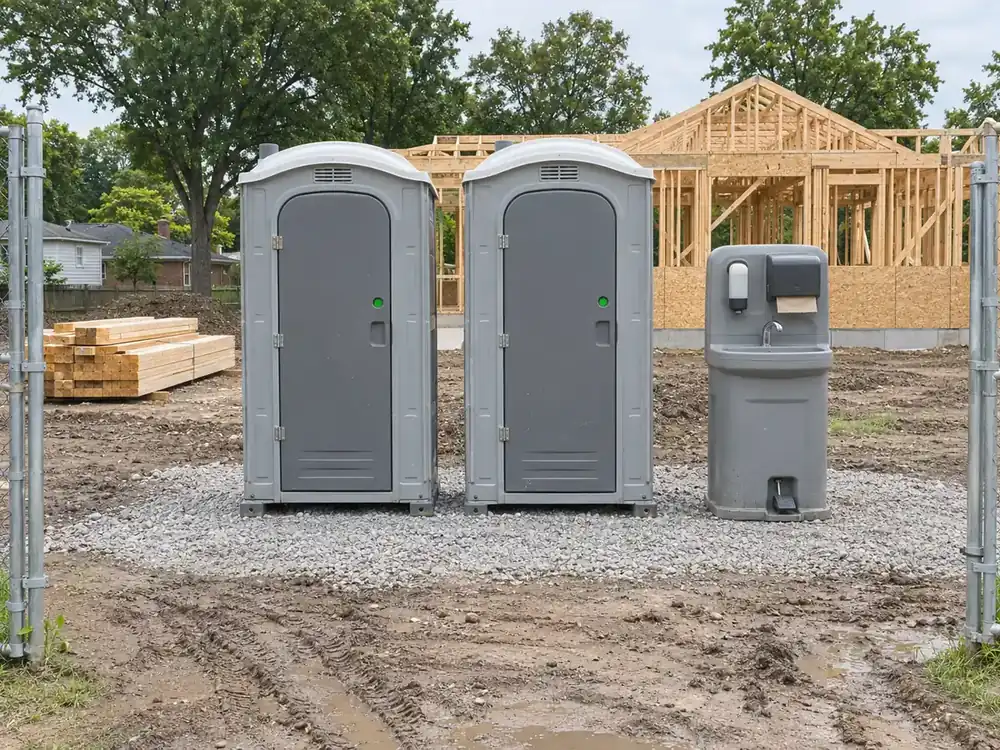
Worker Toilet Access and Washing Facilities in Michigan
Workers need toilet access planned around the people on site and the workday. Construction porta potty rental starts with crew size, shift overlap and the length of the project. Call with those details while the layout develops. The contractor's safety lead handles questions about the rules; your service pro discusses the proposed units and service arrangements.
A Small Crew Still Needs a Toilet Plan
A small crew needs facilities workers can reach during their shift. MIOSHA's FAQ describes Construction Standard Part One, General Rules, rule R 408.40129 as requiring easily accessible toilets without unreasonable restrictions on use. The same MIOSHA FAQ describes an exception for mobile crews with transport readily available to nearby toilets.
Start with the unit mix and a hand-wash station, then discuss worker routes and truck access. Call with the work pattern rather than assuming a short project removes the need for a facilities discussion. Raise any proposed mobile-crew exception with the safety lead.
Michigan Uses Its Own Workplace Safety Program
Michigan administers a state-plan workplace safety program through MIOSHA, as the agency's FAQ explains. The OSHA Michigan State Plan page describes coverage of most private-sector workplaces and state and local government employers, with exceptions. Use Michigan's construction requirements when the work falls under that program.
For porta john requirements on a particular job, ask the contractor's safety lead or MIOSHA which provisions apply. That discussion can run alongside the rental call; it does not need to delay describing the crew's needs.
Federal Sanitation Text Covers Toilets and Washing
The federal text addresses employee toilet facilities and washing facilities separately. OSHA's construction sanitation rule ties toilet facilities to employee count and lists options for sites without a sanitary sewer, subject to local codes. The same OSHA rule addresses washing for harmful contaminants and specifies lavatory water, soap and hand-drying provisions.
Discuss the washing tasks with the safety lead when choosing a hand-wash station. A rental description alone does not establish that the proposed station suits the work. Call to discuss the station alongside the toilets and access for service visits.
A Months-Long Build Needs Regular Planning Reviews
A months-long build needs reviews as trades, work areas and access routes change. Construction porta potty services should be planned around the busiest workforce and service visits suited to the expected use. Discuss how often visits should occur; do not assume a fixed schedule from the rental's duration.
If considering a porta potty trailer for construction work, discuss the space and connections required for the proposed model. Call with the changing site layout. A local portable restroom partner in our network will explain the scope and price for the proposed unit mix and service plan before arrangements are made.
Public Access Needs a Separate Discussion
Public access calls for an accessibility review distinct from crew-only facilities. The ADA Standards exempt portable toilets reserved exclusively for construction personnel from the toilet-room and accessible-route requirements identified in the construction-sites section. Discuss accessible units and routes with the project lead when visitors or the public will use facilities.
Rental Planning Decisions Alongside the Rules
The rule text informs facility planning, while the rental discussion settles the proposed unit selection and service arrangements.
| Planning point | Person to involve |
|---|---|
| Applicable worker sanitation provisions | Contractor's safety lead or MIOSHA |
| Crew size and shift overlap | Site supervisor |
| Unit choice and hand-wash station | Service pro and safety lead |
| Placement and truck route | Delivery pro and site supervisor |
| Service visit frequency | Service pro, using expected usage |
Keep units on firm, level ground clear of traffic, equipment and overhead lines. Never move, tip, lift or climb on a unit. Report blocked access or damage so your service pro can arrange the next step. Waste handling belongs to the service pro; discuss service visits during the call.